Short answer
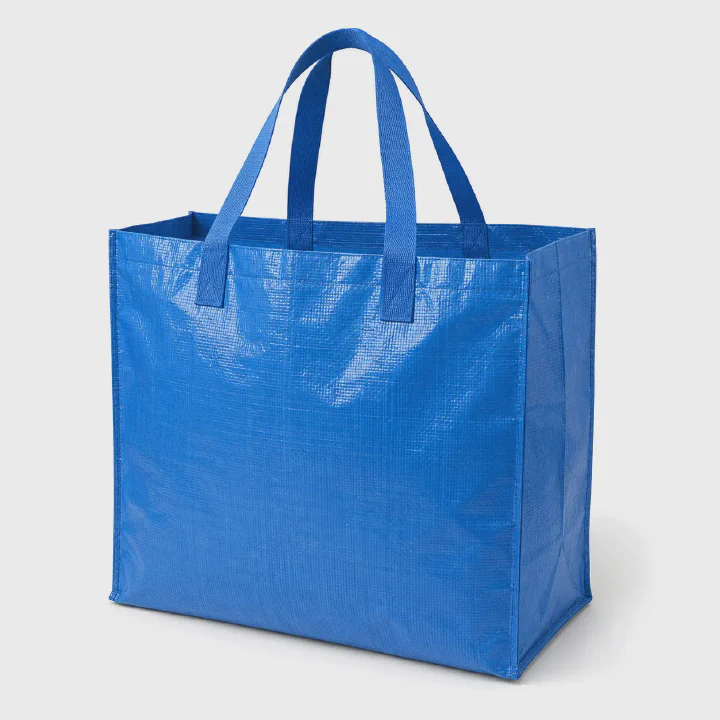
A PP woven shopping bag is a reusable carrying bag made from polypropylene resin that has been formed into flat tapes and woven into a strong fabric. The woven body provides tear resistance and dimensional stability; lamination, reinforced webbing handles, gussets, seams and closures are then selected to suit the intended load, appearance and reuse cycle.
Unlike a thin disposable plastic bag, it is an engineered package. Its performance depends on the whole construction—not one material number.
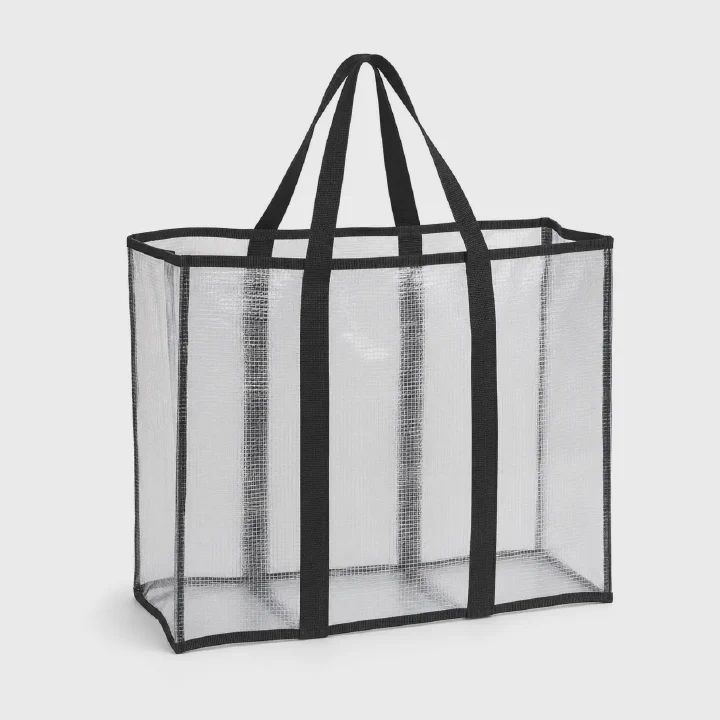
Buyers comparing alternative substrates can continue with PP woven bags vs non-woven bags. For common finished constructions, review laminated woven shopping bags and clear woven grocery bags.
What does “PP woven” mean?
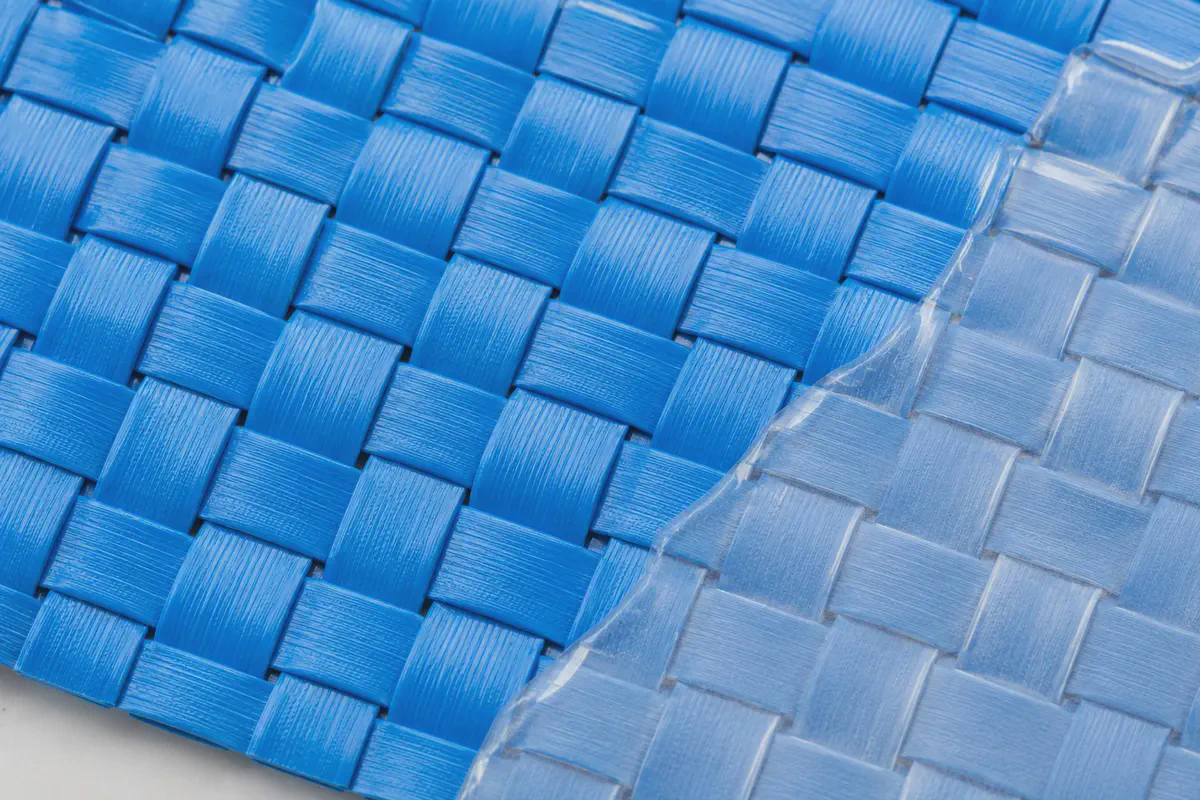
PP is the abbreviation for polypropylene, a thermoplastic polymer widely used in packaging. Woven describes how the material is built. Polypropylene is melted and extruded into a thin film, slit into flat tapes, stretched to improve tensile properties, and interlaced in the warp and weft directions.
The result is a grid-like fabric that is light in relation to its strength. Because a local cut or puncture does not behave in exactly the same way as it would in a continuous film, the woven structure can offer useful resistance to tearing and repeated handling.
How a PP woven shopping bag is constructed
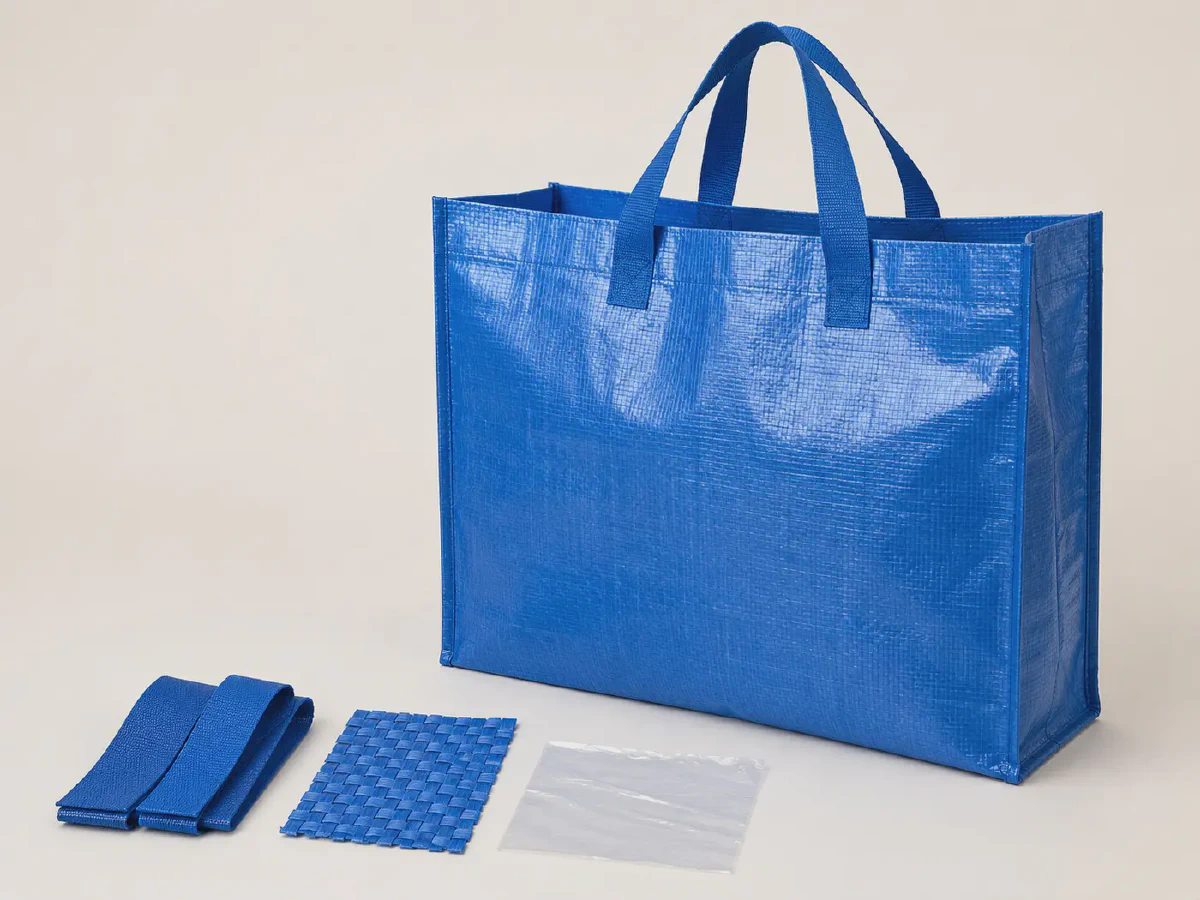
A finished bag normally combines several components. Each one solves a different problem.
| Component | Function | Common buyer choices |
|---|---|---|
| Woven PP body | Carries and distributes the load | Fabric weight, weave density, color |
| Coating or lamination | Improves surface consistency, cleaning and print presentation | Matte or gloss film, printed film, unlaminated finish |
| Side and bottom gussets | Create usable volume and a stable base | Finished width × height × gusset |
| Webbing handles | Transfer the load to the user | Width, length, hand-carry or shoulder-carry |
| Seams and binding | Join panels and protect cut edges | Stitch type, seam allowance, top binding |
| Closure | Controls access and content retention | Open top, tab, zipper or hook-and-loop |
| Optional insert | Helps the base retain its shape | Removable or sewn-in base board |
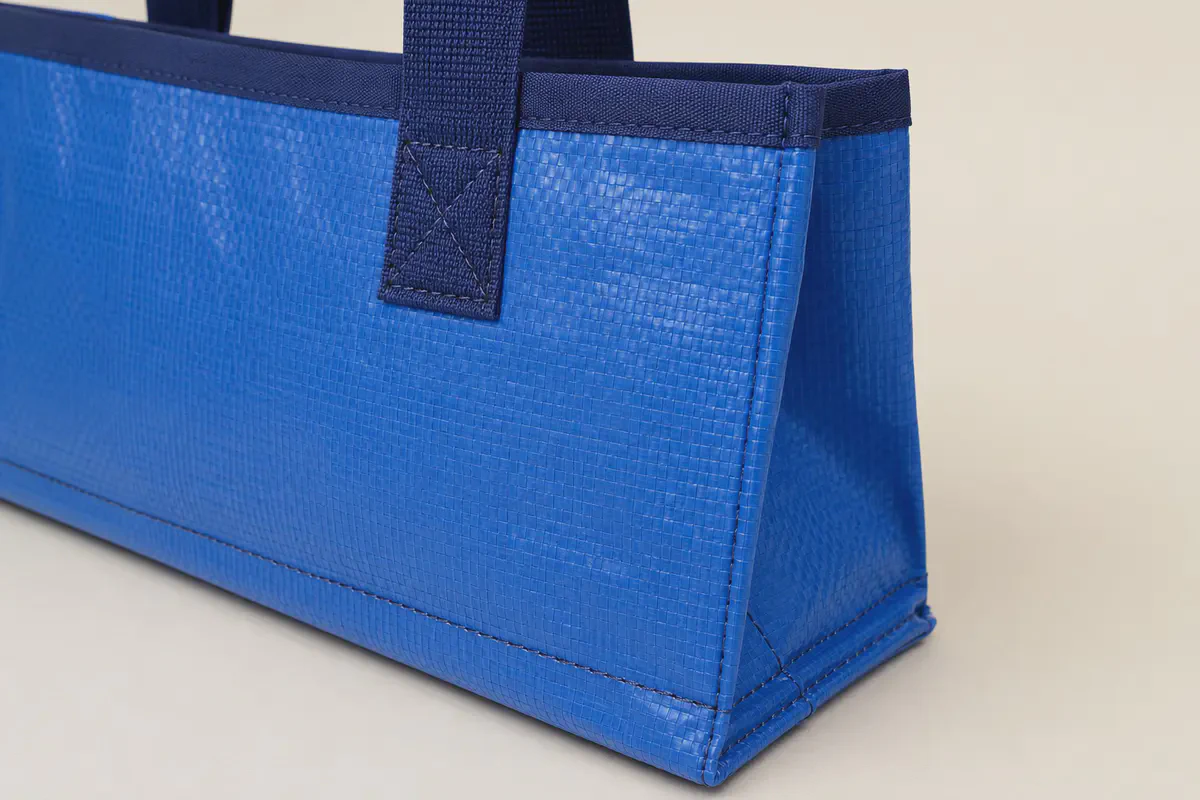
Laminated versus unlaminated fabric
An unlaminated woven body keeps the visible woven texture and is often chosen when cost, flexibility and simple graphics are priorities. Depending on the weave, it may allow more air or fine moisture paths through the body.
A laminated woven body adds a film to one or both surfaces. Lamination can create a smoother wipe-clean finish, improve graphic quality, reduce moisture penetration through the body and make colors appear more consistent. It does not automatically make the finished bag waterproof: needle holes, seams, zipper construction and the opening still matter.
Which specifications matter most?
There is no universal “standard” PP woven shopping bag. A useful specification begins with what the bag must carry and how it will be handled.
1. Finished dimensions and usable capacity
State dimensions as width × height × gusset and confirm whether they are internal, external or nominal finished measurements. Two bags with the same flat width can hold very different volumes if their gussets and closure geometry differ.
Capacity in litres is useful for comparison, but it should not be confused with load rating. Bulky textiles may fill a bag without creating a heavy load; bottles or canned goods can create high stress in a smaller volume.
2. Fabric construction and weight
Fabric weight is commonly expressed in grams per square metre (GSM), but GSM alone does not prove strength. Tape properties, weave density, coating or film weight, panel direction and production consistency all influence the result.
Ask the supplier to separate the woven base weight from any coating or lamination weight. Otherwise, two materials described with the same total GSM may use different structural bases.
3. Handle design
The handles are a frequent stress point. Specify:
- webbing material and width;
- handle drop or total loop length;
- hand-carry or shoulder-carry use;
- attachment length and position;
- stitch pattern and reinforcement;
- whether webbing terminates near the top or wraps under the base.
For dense or repeated loads, a longer attachment path or wraparound construction can spread force beyond a small stitched area.
4. Opening and closure
Open-top bags are quick to load and economical. Zippers improve retention and are common for moving or storage, but zipper tape, slider quality, opening length and end reinforcement must match the intended use. A closure should be selected after considering how the bag will be filled—not as a decorative add-on.
5. Printing and branding
Simple surface printing can suit basic logos and limited colors. A printed film laminated to the woven body can support more detailed graphics and consistent retail presentation. Buyers should provide artwork format, color references, print area, orientation, seam exclusions and an approved sample standard.
What are the practical benefits?
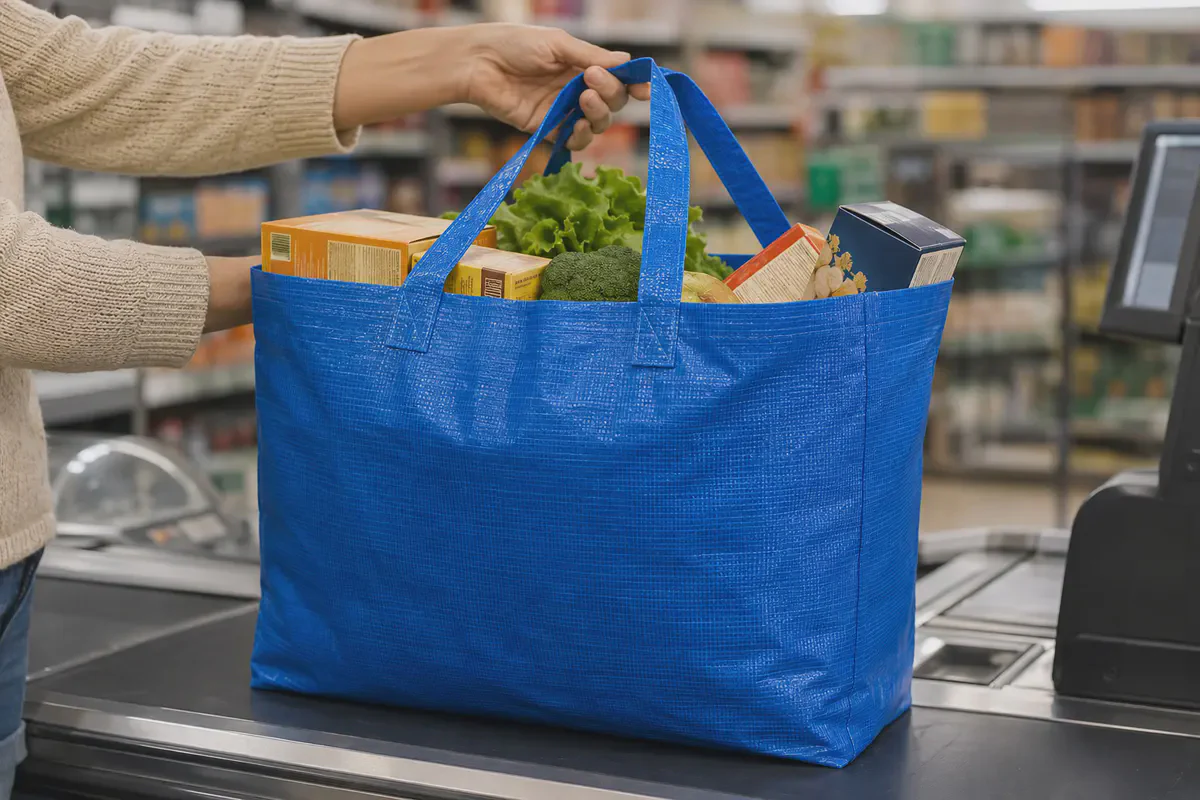
PP woven shopping bags are used because they can combine several useful properties in one customizable package:
- Reusable construction: suitable for repeated retail, grocery, promotional or household use when correctly specified.
- High capacity at low bag weight: the woven structure supports larger formats without making the empty bag excessively heavy.
- Custom dimensions: width, height and gusset can be matched to the contents or checkout process.
- Reinforcement options: webbing paths, binding and seams can be adjusted for the target load.
- Brand visibility: colors, labels and printed lamination can turn the bag into reusable branded packaging.
- Easy storage: many constructions fold flat when empty.
What are the limitations?
PP woven bags also have limits that should be stated clearly.
- A laminated body is moisture-resistant, not automatically watertight.
- Sharp corners can puncture the body or concentrate stress.
- Excessive load can cause handle, seam or zipper failure even when the fabric remains intact.
- Low-temperature impact, prolonged UV exposure and repeated flexing can affect service life depending on the resin and additives.
- Mixed-material accessories may complicate recycling.
- Printed appearance can vary if color, film, lamination and production tolerances are not approved before bulk production.
These are specification issues, not reasons to avoid the material. A sample and an agreed test method reduce uncertainty.
PP woven, non-woven or ordinary plastic film?
| Bag type | Structure | Typical strength and reuse | Best suited to |
|---|---|---|---|
| PP woven bag | Interlaced flat PP tapes; optional lamination | High tear resistance and configurable reinforcement | Grocery programs, retail, promotional bags, storage and moving |
| PP non-woven bag | Bonded PP fibers | Soft hand feel; generally lighter-duty | Events, lightweight retail and promotional distribution |
| Plastic film bag | Continuous PE or PP film | Thin and compact; performance depends heavily on film thickness | Lightweight short-cycle carrying and liners |
The correct choice depends on target load, expected number of uses, presentation, packing volume and cost—not simply which material is described as reusable.
How are PP woven shopping bags made?
The manufacturing route generally follows these stages:
- Resin preparation: polypropylene resin is blended with color masterbatch and selected additives.
- Tape extrusion and drawing: molten polymer is formed into film, slit into tapes and stretched.
- Weaving: tapes are interlaced to form woven fabric.
- Coating, lamination or printing: the surface is finished according to the artwork and protection requirements.
- Cutting: panels are cut to the approved dimensions and orientation.
- Sewing and assembly: gussets, webbing, binding, closures and optional inserts are assembled.
- Inspection and packing: dimensions, appearance, stitching, function and packing quantity are checked against the approved specification.
How should a buyer evaluate quality?
A visually acceptable sample is not enough. The approval record should define measurable checkpoints.
| Checkpoint | What to confirm |
|---|---|
| Dimensions | Finished width, height, gusset and tolerance |
| Appearance | Color, print registration, lamination bubbles, wrinkles and contamination |
| Stitching | Stitch consistency, skipped stitches, loose ends and reinforcement position |
| Handles | Webbing width, handle drop, alignment and attachment length |
| Closure | Smooth operation, end stops and usable opening |
| Load test | Test load, dwell time, lifting method and acceptance criteria |
| Packing | Fold method, pieces per carton, carton size and marks |
For custom orders, compare bulk goods with a signed sample or an approved specification sheet. “Heavy duty” should never be the only acceptance criterion.
What information should you send for a quotation?
To receive a useful quotation rather than a generic price, provide:
- intended contents and target carrying load;
- finished width, height and gusset—or the item dimensions that must fit;
- preferred laminated or unlaminated finish;
- handle type, length and carrying method;
- closure requirement;
- body color and printing artwork;
- order quantity and packing requirement;
- destination country or port;
- required testing, compliance or inspection standard.
If the final construction is not yet decided, start with the use, load, dimensions and quantity. Those four inputs allow a supplier to recommend a practical woven body, handle path and closure instead of guessing.
Final takeaway
A PP woven shopping bag is not defined only by polypropylene fabric. It is a system of woven tapes, surface finish, dimensions, gussets, handles, seams and optional closures. Buyers get better performance and more comparable quotations when they define the real application first and approve measurable construction details before production.