Short answer
Specify moving-bag handles as a complete load-transfer system, not as a strap width or an unsupported “heavy-duty” claim. Start with the actual contents, target working load, carrying method and expected number of handling cycles. Then define the webbing, handle drop, attachment path, stitch pattern, body reinforcement, seams and finished-bag test.
For dense contents or repeated relocation, wraparound webbing is often the safer starting point because it spreads force down the bag body and around the base. The final rating must still be verified on a production-intent bag loaded with representative contents.
Compare these requirements with heavy-duty moving bag constructions and the broader wholesale moving bag buying guide. The completed bag should then be verified using the PP woven bag quality inspection checklist.
What determines moving-bag handle strength?
The buyer should evaluate the path followed by force from the user’s hand to the contents. The hand pulls the handle loop; the loop loads the webbing; the attachment stitches transfer force into the woven panel; the panel and seams carry it toward the base; and the base supports the contents. A weak point anywhere in this chain can end the test.
| Part of the system | Buyer must define | Why it matters |
|---|---|---|
| Intended contents | Type, density, shape and movement | Books, textiles and mixed household goods stress a bag differently |
| Working load | Normal intended filled weight | Establishes the real use condition |
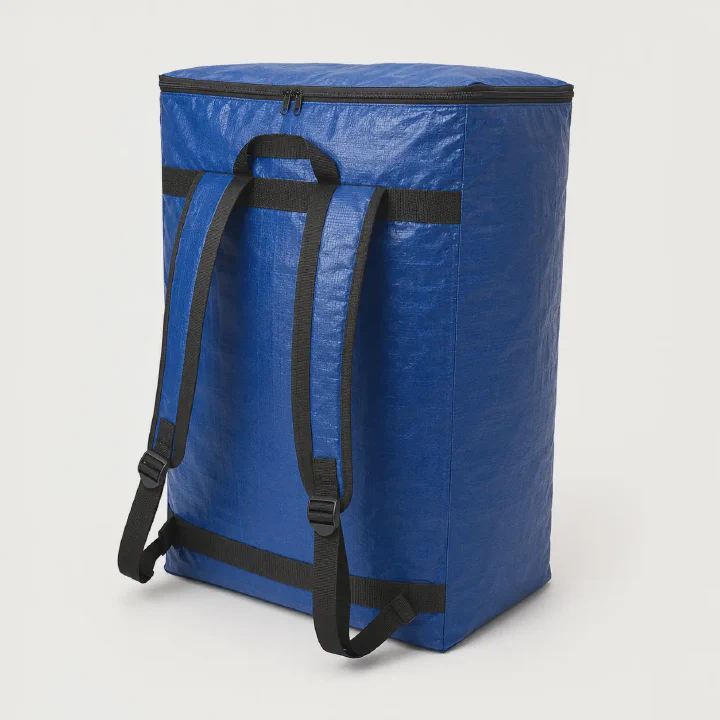
| Carrying method | Hand, forearm, shoulder, side or two-person lift | Changes handle drop, leverage and load balance |
| Webbing | Polymer, width, thickness, weave and color | Affects grip, elongation and tensile capacity |
| Handle path | Top attachment, long attachment or wraparound | Controls how force enters and travels through the body |
| Stitching | Pattern, rows, thread and stitch density | Transfers force from webbing into the panel |
| Body and seams | Woven base, lamination, seam and reinforcement | Must resist concentrated attachment forces |
| Finished-bag test | Load, cycles, lift and pass criteria | Verifies the assembled system rather than one component |
Fabric tensile data and webbing breaking strength are useful component records, but neither is a finished-bag rating. A wide strap stitched through a short or weak area may peel away from the body before the webbing itself approaches its laboratory breaking load.
Start with contents, not a generic kilogram claim
Two loads of equal weight can produce different stresses. Folded bedding fills the bag and supports the panels; books concentrate mass near the base; tools or rigid objects create point loads; and mixed goods can shift during carrying. State both the weight and the typical load shape.
Record the normal working load separately from any test load. The working load describes intended use. The test load and test method are verification conditions agreed by buyer and supplier. Do not turn a one-time overload test into an unrestricted public capacity claim.
The specification should answer:
- What is normally packed inside?
- What is the target working load?
- Will the bag be carried by one or two people?
- Is it lifted only, or carried through stairs, vehicles and warehouses?
- How many handling or reuse cycles are expected?
- Can the contents shift, press against corners or contact the zipper?
Short attachment or wraparound webbing?
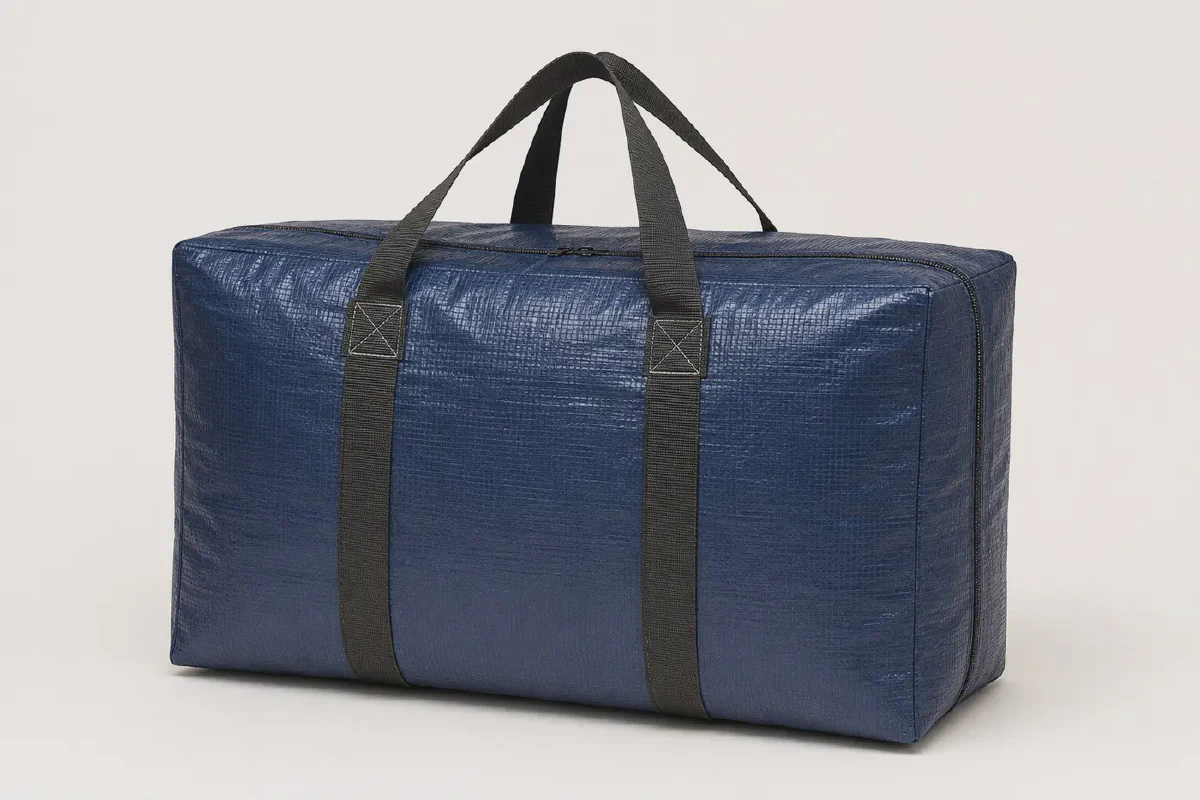
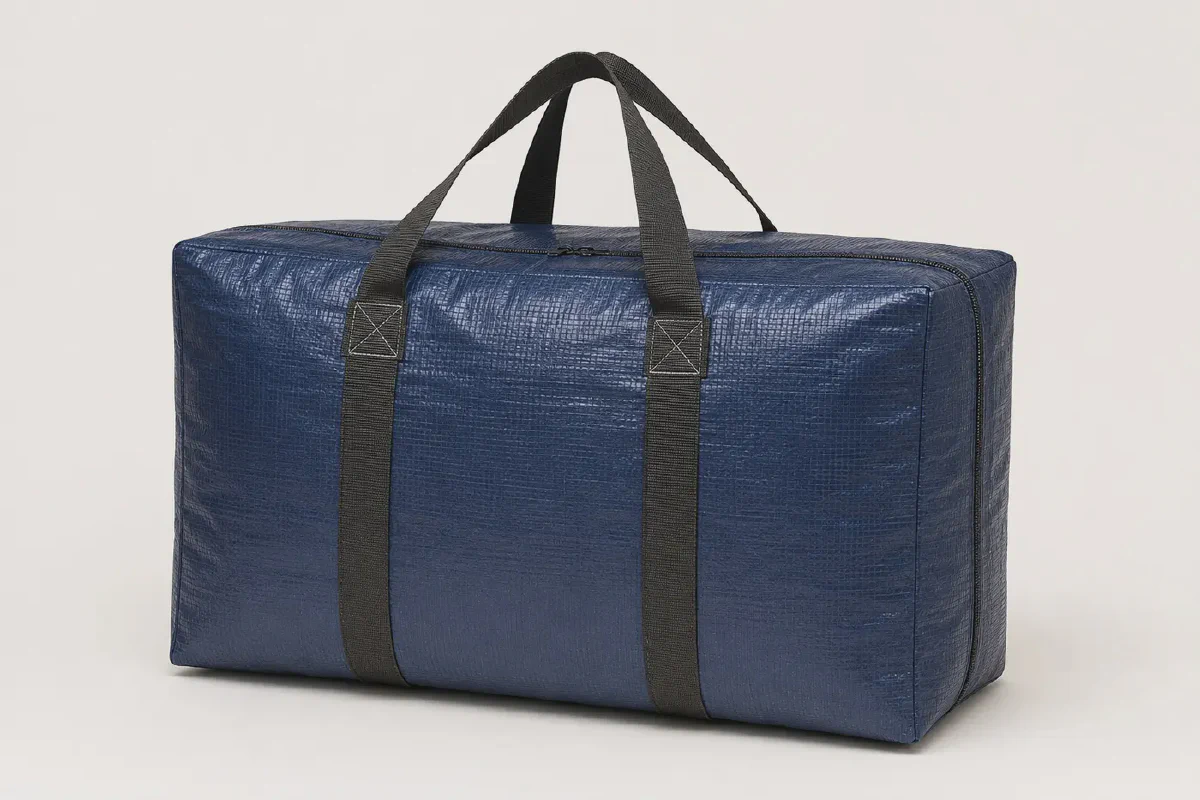
Top-attached handles can be efficient for lighter shopping or storage bags. Their performance depends on a sufficiently long attachment zone, suitable stitching and a body panel that can accept the concentrated force.
Long vertical attachments extend the webbing farther down the front and back panels. They distribute force over more fabric and give inspectors a visible reinforcement path.
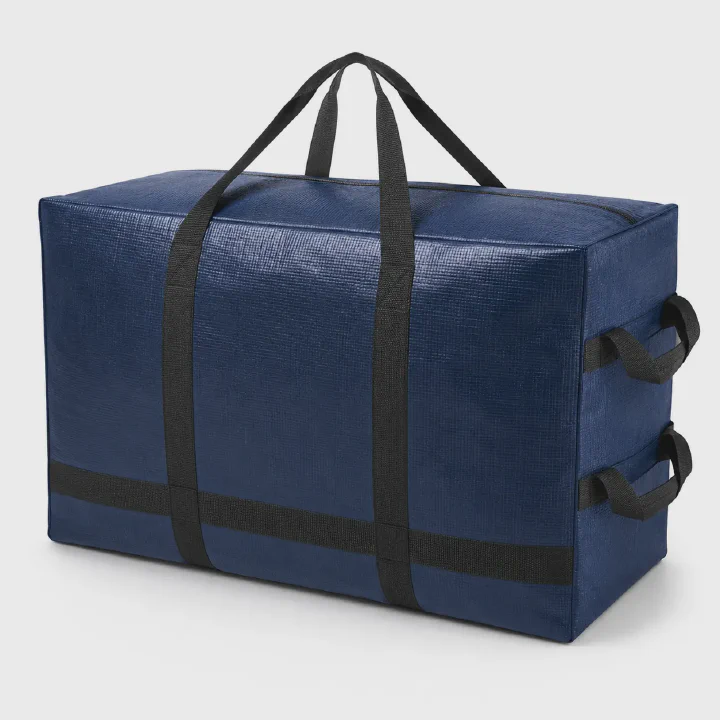
Wraparound handles continue down the panels and beneath or around the base. This construction is commonly selected for extra-large moving bags carrying dense clothing, books or mixed household contents. It reduces reliance on a small area near the top edge, but it still requires correctly aligned webbing, reinforced seams and a stable base.
| Construction | Best starting point for | Main point to verify |
|---|---|---|
| Short top attachment | Lightweight retail or storage use | Panel tear and stitch pull-out at the attachment end |
| Extended vertical attachment | Medium loads and repeated carrying | Attachment length, alignment and lower stitch termination |
| Wraparound webbing | Dense, bulky or repeated moving loads | Base path, bottom seam, webbing continuity and balance |
| Side lift handles | Two-person carrying or vehicle loading | Position, user clearance and unequal loading |
Wraparound construction should not be chosen only because it looks strong. If the webbing twists, misses the reinforced base zone or is sewn over an unsuitable seam, the apparent reinforcement may add little usable performance.
How should webbing and handle drop be specified?
List the webbing material, finished width, approximate thickness or agreed construction, color and approved reference sample. Width influences hand comfort and the area available for stitching, but two webbings of equal width can have different weave density, elongation and tensile behavior.
Handle drop is measured vertically from the finished top edge of the bag to the underside of the handle at its highest point. It determines whether the user can carry the bag by hand, on the forearm or over the shoulder. Excessive drop can let a heavy bag swing and strike the legs; insufficient drop can force the user to grip only a small portion of the loop.
For a large moving bag, confirm handle drop on a filled sample. The bag body may bulge and change the available hand or shoulder clearance.
Stitching must transfer the load into the panel
The attachment zone should be long enough to spread force and should avoid ending at an already stressed fold or seam. Common reinforcement patterns include multiple rows, a box pattern, an X inside the box, or another documented production pattern. The name of the pattern is less important than its dimensions, thread, stitch density, placement and repeatability.
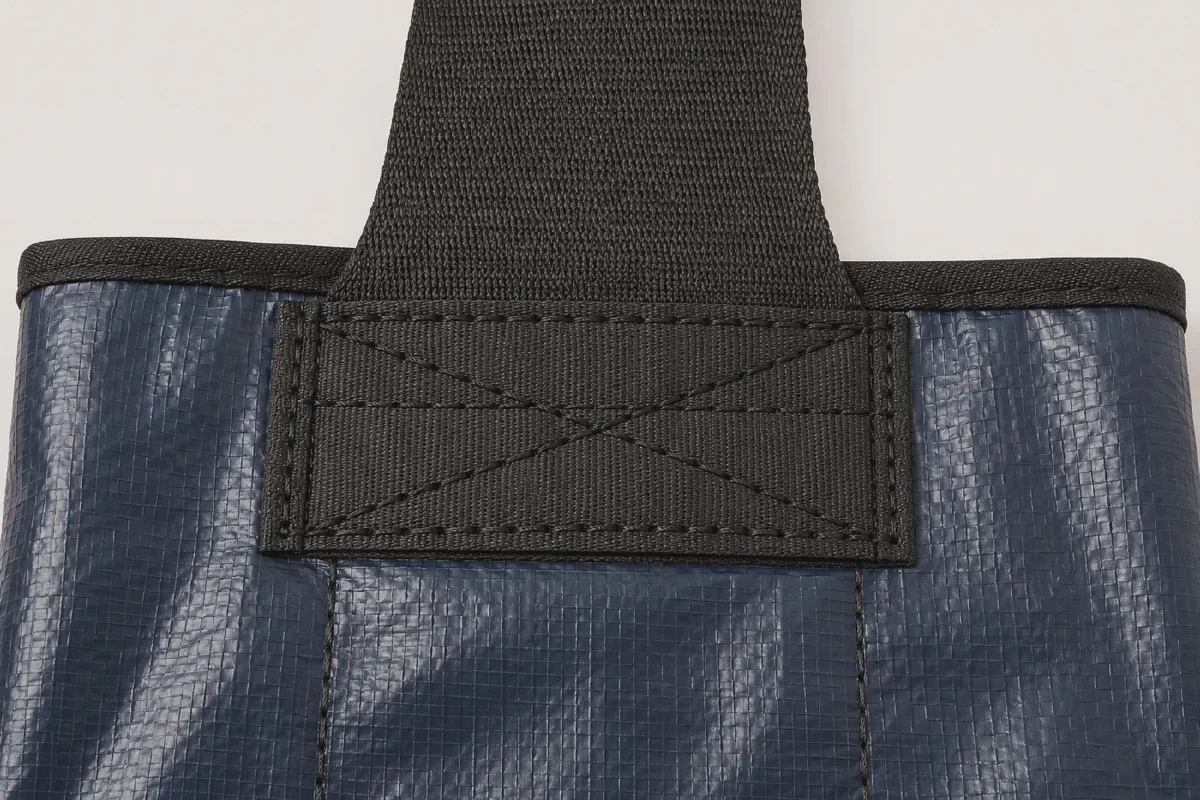
When approving the sample, record:
- attachment-zone width and length;
- distance from the bag edge, seam or zipper;
- number and location of stitch rows;
- box or cross-stitch dimensions where used;
- thread type or approved reference;
- stitch density and acceptable skipped stitches;
- reinforcement patch, binding or folded fabric beneath the webbing;
- start and end points of the webbing path.
Inspect both sides where possible. A neat front surface can hide incomplete stitch penetration, thread damage or a misplaced backing patch.
The body, seams and base must support the handles
Handle failure is not limited to broken webbing. The attachment can tear out with a piece of woven fabric, a side seam can open, the base can deform, or the zipper area can split as the filled bag changes shape. The body specification and handle specification therefore belong in the same approved drawing.
For a laminated woven body, identify the woven base and surface layer separately. Total GSM alone does not show how much structural woven material is available beneath the stitching. Confirm seam allowance, binding, base insert where used and the relationship between wraparound webbing and the bottom seam.
How to write a meaningful finished-bag test
A useful test reproduces the intended handling closely enough to reveal the relevant failure modes. “Holds 50 kg” is incomplete unless the load, bag size, lifting method, duration and acceptance criteria are stated.
| Test variable | What to record |
|---|---|
| Contents | Actual products or an equivalent load with similar shape and movement |
| Working load | Normal intended filled weight |
| Test load | Agreed verification load, kept distinct from the working claim |
| Conditioning | Temperature, moisture or rest period when relevant |
| Lift method | Handles used, lift height, speed and whether the load is balanced |
| Hold | Time suspended or supported at each cycle |
| Repetitions | Number of lift, carry, set-down or stair cycles |
| Carrying distance | Route, turns, stairs or vehicle transfer if representative |
| Pass criteria | No breakage, seam opening, unsafe elongation or specified permanent damage |
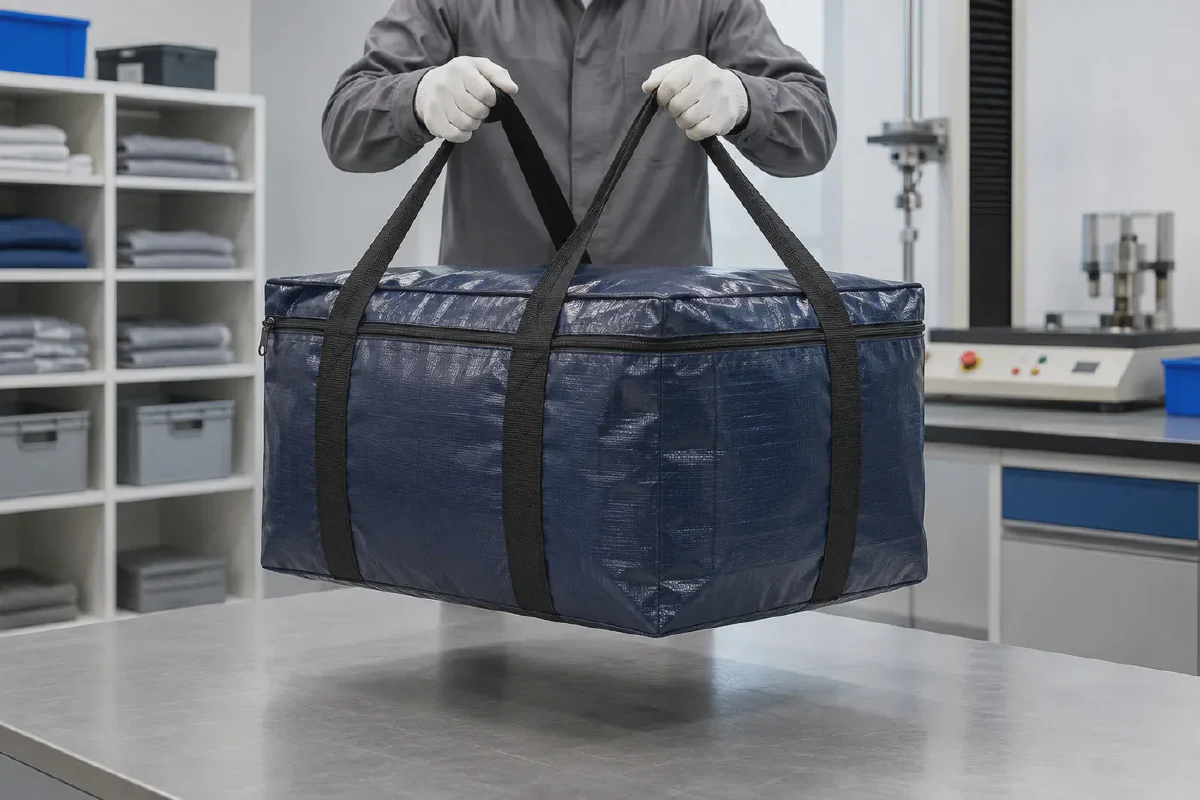
After the test, inspect webbing elongation, broken or loose stitches, fabric whitening, tape separation, panel tearing, seam opening, base distortion, zipper damage and permanent handle-length change. Photograph the same critical areas before and after testing.
Static hanging and repeated handling answer different questions. A static hold can expose creep or severe weakness. Repeated lift-and-set-down cycles are better for checking progressive stitch and seam damage. If the actual use includes dragging, side lifting or two-person carrying, add those as separate conditions rather than assuming a top-handle test covers them.
Common failure modes and their causes
| Observed failure | Likely specification issue |
|---|---|
| Webbing breaks away with intact panel | Webbing or stitch construction is inadequate |
| Stitches pull through woven body | Attachment area or panel reinforcement is insufficient |
| Panel tears at the bottom of the attachment | Load is concentrated at a short termination point |
| Bottom seam opens | Wraparound path and base seam were not engineered together |
| One handle takes most of the load | Position, length or sewing alignment is inconsistent |
| Handles cut into the hand | Webbing is too narrow, stiff or poorly matched to the working load |
| Zipper or top edge distorts | Bag dimensions, load shape and handle geometry are poorly matched |
Failure analysis should identify the first component that changed, not only the final visible damage. A seam may open after one handle lengthens and shifts the load, for example.
What to send for an accurate quotation
Provide one controlled specification package rather than separate chat messages. It should include:
- finished width × height × gusset;
- actual contents and target working load;
- carrying method and expected reuse cycles;
- body fabric, lamination and seam construction;
- webbing material, width, color and handle drop;
- attachment path with dimensions and stitch detail;
- zipper, top opening, side handles and base insert;
- quantity, printing, packing and destination;
- prototype approval requirements;
- finished-bag test method and acceptance criteria.
Use the approved sample as a physical reference, but also lock the measurable construction into the purchase specification. A sample alone does not tell production which details are critical or what variation is acceptable.
Buyer checklist
- The normal contents and working load are stated.
- Handle drop matches the intended carrying method.
- Webbing construction and width are approved, not width alone.
- The attachment path is shown on a bag drawing.
- Stitch dimensions, placement and thread are recorded.
- Body panels, seams and base support the same load path.
- The sample is tested with representative contents.
- Test load, cycles, lift method and pass criteria are written.
- Bulk inspection compares the production handle system with the approved sample and drawing.
Final recommendation
For moving bags, ask first where the load travels, then ask how wide the handle is. A reliable specification connects the user’s grip to the webbing, attachment, body, seams and base, and verifies that connection with a repeatable finished-bag test. This approach produces a more useful quotation and a more defensible working-load claim than a generic “heavy-duty handle” description.